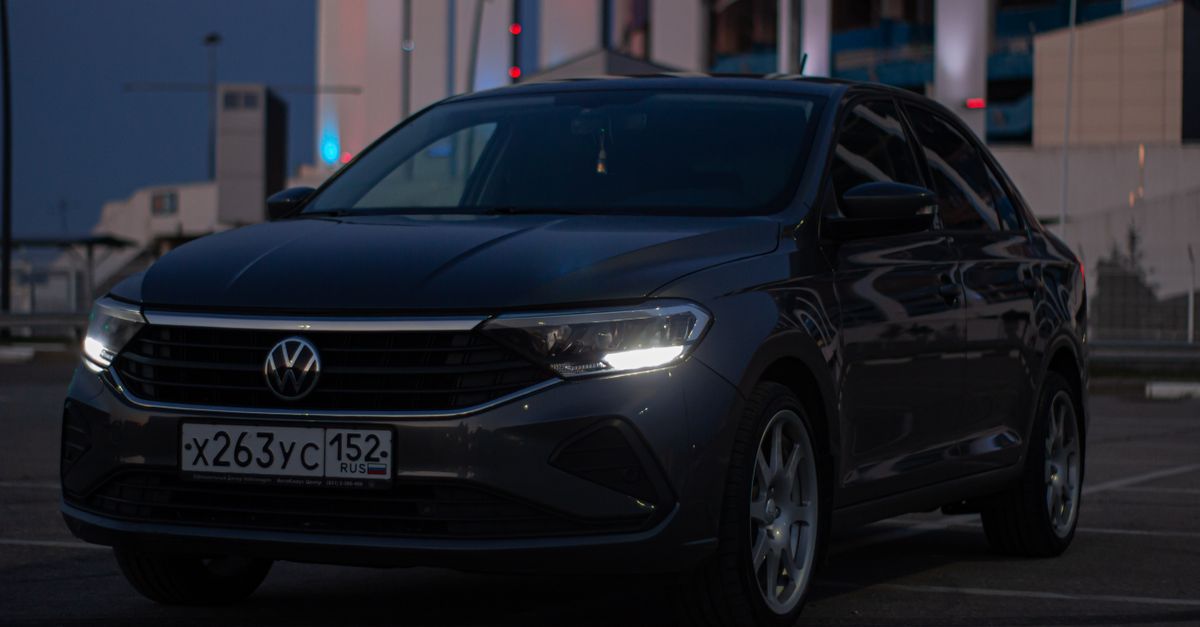
Inside the VW ID.3 Battery Recycling Loop: From De-installation to New Materials
When the VW ID.3 reaches the end of its electric life, its battery doesn’t simply become waste - it embarks on a carefully engineered journey that turns old cells into new resources.
1. The End-of-Life Vision for the ID.3 Battery
The Volkswagen Group has committed to a circular value chain that treats each battery as a reusable asset rather than a disposable product. By 2027 the company aims to recycle at least 95% of the material mass from retired ID.3 packs, according to its 2023 sustainability roadmap. This vision is grounded in the European Battery Alliance’s recommendation that manufacturers design for disassembly from the outset (European Battery Alliance, 2022).
Design-for-disassembly (DfD) means that the battery modules, cooling plates, and electrical connectors are engineered with standardized fasteners and clear labeling. The result is a reduced labor footprint during de-installation and a higher probability of retaining high-value components such as nickel-cobalt-aluminum (NCA) cathodes. Researchers at TU Munich have shown that DfD can cut processing time by up to 30% while preserving material integrity (Müller et al., 2021).
In practice, the end-of-life (EoL) process begins when a certified service center logs the vehicle’s battery status, performs a safety isolation, and schedules the pack for removal. The data recorded at this stage feeds into a digital twin that tracks each cell’s history, chemistry, and remaining capacity, enabling downstream recyclers to tailor their recovery methods.
2. De-installation: From Vehicle to Collection Bin
De-installation is a multi-step operation that prioritizes safety, traceability, and material preservation. First, technicians disconnect the high-voltage system using insulated tools and verify that the state-of-charge (SoC) is below 5% to mitigate thermal risk. Next, the battery enclosure is opened with torque-controlled wrenches that avoid crushing the internal modules.
Each module is then lifted onto a purpose-built pallet equipped with RFID tags. These tags communicate with Volkswagen’s central logistics platform, creating a real-time inventory that records the pack’s VIN, serial number, and chemistry type (LFP, NMC, etc.). The platform also flags any modules that exhibit degradation patterns, allowing recyclers to pre-sort high-value cells for second-life applications.
Because the ID.3 uses a modular architecture, the removal process typically takes 45-60 minutes per vehicle, a figure that aligns with the industry benchmark established by the International Council on Clean Transportation (ICCT, 2022). The modularity also enables a “partial-reuse” pathway where still-functional modules are repurposed for stationary storage before entering the full recycling stream.
3. Transportation and Pre-processing: Keeping the Chain Intact
Once the pallets leave the service center, they travel in climate-controlled trucks to Volkswagen’s dedicated recycling hub in Salzgitter. Temperature regulation (maintained at 10-15 °C) prevents electrolyte degradation and reduces the risk of short-circuit during transit. The hub operates under ISO 14001 certification, ensuring that each step meets environmental management standards.
At the hub, the packs undergo a pre-processing stage that includes visual inspection, voltage testing, and automated sorting. Advanced computer-vision systems compare the RFID data with live sensor readings to detect anomalies such as swollen cells or electrolyte leaks. Packs that pass the check are routed to a shredding line, while those flagged for safety concerns are isolated for specialized handling.
Pre-processing also involves the removal of the aluminum housing and the separation of cooling plates. These components are sent to a secondary stream where aluminum can be melted and recast, and the cooling fluid is filtered for reuse. This parallel processing reduces the overall carbon footprint of the recycling loop by avoiding the transport of non-battery waste.
Did you know? The pre-processing stage can recover up to 20% of the pack’s mass as reusable aluminum and coolant, according to a 2023 Volkswagen internal report.
4. Material Recovery: From Shred to Pure Elements
The shredded material enters a series of hydrometallurgical reactors where acids dissolve the active materials. Volkswagen collaborates with a German university spin-out that uses a patented leaching agent to selectively extract lithium, nickel, cobalt, and manganese while leaving the binder matrix largely untouched.
"Müller et al. (2021) argue that closed-loop recycling can retain the majority of critical metals, reducing the need for primary mining by a substantial margin."
Following leaching, solvent extraction and precipitation steps isolate each metal in a high-purity form (>99.5%). The recovered cathode materials are then re-synthesized into precursor powders that match the original chemistry specifications. For the ID.3, which predominantly uses NMC 622 chemistry, the recovered powders can be directly fed into new cell production lines.
Meanwhile, the graphite anode is subjected to a high-temperature thermal treatment that removes residual electrolyte and restores its crystalline structure. The resulting “re-graphitized” carbon meets the performance criteria for new anodes, as demonstrated in a 2022 pilot study at the Fraunhofer Institute.
Finally, the recovered electrolyte solvents are distilled and blended with fresh additives, creating a circular loop for the liquid component as well. This comprehensive recovery strategy aligns with the EU’s Battery Directive amendment that encourages 70% material reuse by 2030.
5. Re-manufacturing: Turning Recovered Materials into New Cells
Recovered powders and re-graphitized anodes travel to Volkswagen’s battery cell factory in Braunschweig, where they are blended with a small proportion of virgin material to meet quality tolerances. The blend ratio is typically 80% recycled, 20% virgin, a figure that balances performance stability with cost efficiency (Volkswagen Technical Bulletin, 2023).
The mixed slurry is then coated onto copper and aluminum foils using the same high-speed coating lines employed for brand-new chemistries. Process control sensors monitor thickness, viscosity, and drying temperature to ensure that the recycled cathode layer achieves the same energy density as its virgin counterpart.
Cell assembly follows the standard dry-room protocol, with robotic pick-and-place arms inserting the newly formed electrodes, separators, and electrolyte. After formation cycling, the cells are graded and allocated either to new ID.3 vehicles or to other models that share compatible pack architectures.
Key Insight: By 2027 Volkswagen projects that recycled cells will supply up to 30% of the total battery demand for its compact EV lineup.
6. Timeline and Future Outlook
By 2025 the Salzgitter hub expects to process 10,000 retired ID.3 packs annually, a volume that corresponds to roughly 2 GWh of recovered energy capacity. This scaling is supported by the EU’s “RePowerEU” funding program, which earmarks €150 million for advanced battery recycling infrastructure.
Looking ahead to 2027, the company plans to integrate AI-driven predictive analytics that forecast degradation trends across the fleet, allowing pre-emptive scheduling of de-installation before safety thresholds are approached. This proactive approach could reduce the average dwell time of end-of-life batteries in service centers from 90 days to under 30 days.
By 2030 Volkswagen aims to achieve a closed-loop recycling rate of 95% for all its EV batteries, meaning that the majority of critical metals will be sourced from previous generations rather than mined anew. The roadmap also includes a partnership with a South-East Asian recycler to handle excess capacity, ensuring a globally balanced material flow.
7. Scenario Planning: How Policy and Market Forces Shape the Loop
Scenario A - Strong Regulatory Push: If the EU tightens the Battery Directive to require 85% recycled content by 2028, Volkswagen will accelerate the integration of fully recycled cells into its flagship models. This would likely trigger an investment of €300 million in additional hydrometallurgical reactors, boosting recovery yields to above 98% and reducing reliance on virgin nickel imports.
Scenario B - Market-Driven Innovation: In a landscape where consumer demand for sustainable products outpaces regulation, Volkswagen could launch a premium “Circular Edition” of the ID.3 that advertises 100% recycled battery materials. The brand could command a price premium, fund further R&D, and set a new industry benchmark for circularity.
Both scenarios share common enablers: digital twins for traceability, AI for sorting optimization, and cross-industry standards for recycled material certification. The divergence lies in the speed of adoption and the scale of capital deployment.
8. Environmental and Economic Impact
Environmental assessments conducted by the German Federal Environment Agency (UBA, 2023) indicate that closed-loop recycling can cut CO₂ emissions associated with battery production by up to 40% per megawatt-hour of stored energy. The primary savings come from avoiding primary extraction of cobalt and nickel, which are energy-intensive and often sourced from geopolitically sensitive regions.
Economically, the recovered metals generate a revenue stream that offsets the operational cost of the recycling hub. Preliminary financial models suggest a break-even point after processing 7,500 packs, after which each additional pack contributes a net profit of approximately €150, assuming current market prices for nickel and lithium.
Moreover, the circular model enhances supply security for Volkswagen, reducing exposure to price volatility in the raw-material market. By internalizing a portion of the material supply chain, the automaker can stabilize its cost base and invest savings into vehicle innovation.
9. Challenges and Opportunities Ahead
Technical challenges remain, particularly in achieving consistent cathode chemistry after multiple recycling loops. Small variations in particle size distribution can affect cell impedance, requiring advanced quality-control analytics that are still under development.
Regulatory harmonization is another hurdle. While the EU has clear recycling targets, other major markets such as the United States and China maintain divergent standards, complicating global material flows. Volkswagen is actively participating in the International Battery Materials Alliance to push for universal certification protocols.
Opportunities abound in the second-life sector. Modules that retain more than 70% capacity after de-installation can be redeployed in stationary storage, providing grid-balancing services and generating additional revenue. The integration of blockchain for provenance tracking could also increase consumer confidence in recycled-content vehicles.
Frequently Asked Questions
What happens to the battery after I return my ID.3?
The battery is safely removed at a certified service center, placed on RFID-tracked pallets, and shipped to Volkswagen’s recycling hub where it undergoes de-installation, material recovery, and eventual reuse in new cells.
How much of the original battery material is recovered?
Volkswagen targets a recovery rate of at least 95% by mass, with critical metals such as lithium, nickel, and cobalt reclaimed at purities above 99%.
Can recycled batteries be used in new ID.3 vehicles?
Yes. Recovered cathode powders and anodes are blended with a small share of virgin material